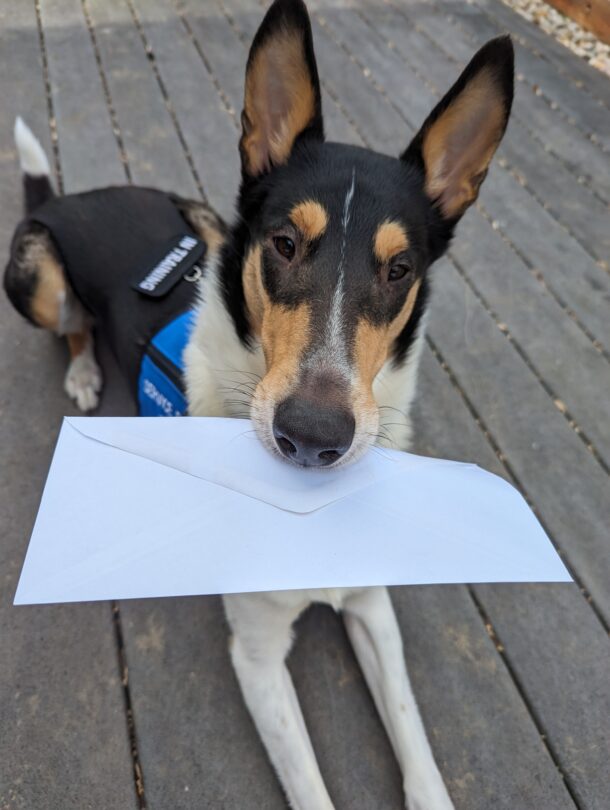
Most service dog public access tests focus heavily on the dog’s behavior. Can the dog walk on a loose leash through a store? Hold a down-stay? Ignore distractions? Respond reliably to cues?
These are important skills, and any public access test should evaluate them. But a service dog team consists of more than the dog.
When evaluating public access readiness, I want to know not only whether the service dog can perform the required behaviors, but whether the handler has the skills to respond appropriately when things don’t go according to plan.
- What happens if the dog becomes ill while out in public?
- What happens if the dog misses a cue or responds more slowly than expected?
- What happens if the environment becomes overwhelming for the dog?
These questions matter because public access is not a rehearsed routine — it is about navigating real-world situations safely, appropriately, and in ways that protect both the dog’s behavioral welfare and the team’s overall success.
For this reason, I encourage service dog trainers and evaluators to include some form of handler assessment as part of the public access testing process. As professionals, we sometimes assume that certain knowledge is “common sense” because we have spent years working with dogs and service dog teams. However, many handlers are learning these concepts for the first time. Explicitly assessing and teaching this information helps ensure handlers have the knowledge they need to make appropriate decisions in public.
This does not need to be complicated. A short written quiz, a few oral questions, or other approaches such as role-play scenarios can provide valuable insight into whether the handler understands public access standards and knows how to respond appropriately when challenges arise. The goal is not to create a “gotcha” situation, but rather to identify areas where additional education or support may be helpful. The assessment format should also be appropriate for the handler and may need to be modified or accommodated based on the individual’s disability.
For example, questions might include:
- What would you do if your dog became sick in a grocery store?
- What would you do if your dog stopped responding reliably during an outing?
- How do you decide when it is time to end a training session or leave a public space?
Handler assessment is not intended to create additional barriers or make testing more difficult. It is a way to evaluate the team as a whole and identify where further education or support may help.
Handler skills and knowledge often determine how successfully a team navigates an off day or an unexpected situation. Public environments are unpredictable. A knowledgeable handler can recognize problems early and make appropriate decisions. It is also important for handlers to know when to reach out for professional help. A comprehensive assessment gives trainers the tools to best support both members of the team.
Learn More about Public Access Training
Getting Started in Public Access