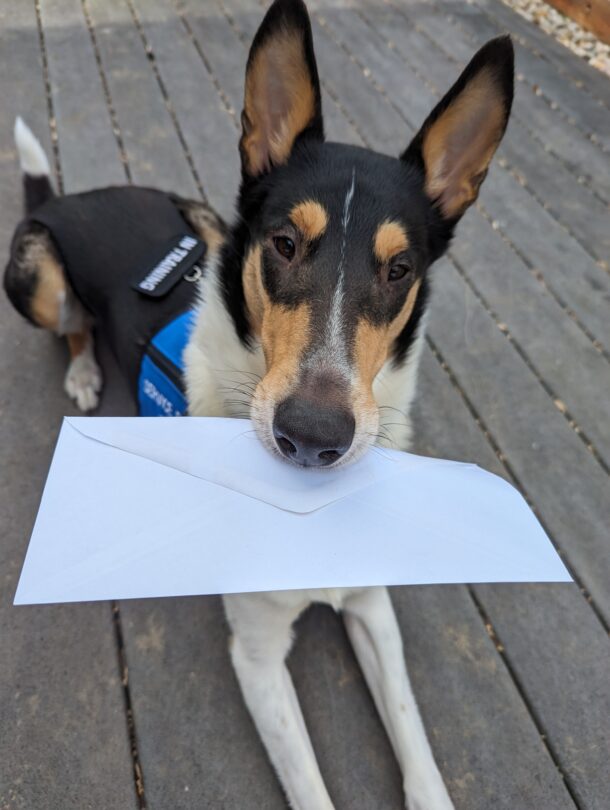
Service dog industry language regarding public access training has historically been very absolute. No sniffing while working, no petting while working, always “invisible” and out of the way. In practice, applying some rules with consideration for the dog’s needs, thoughtful flexibility and common sense, can reduce their overall stress level, and in turn result in a dog that is better able to support their handler. Allowing for some flexibility doesn’t automatically mean allowing chaos. The more opportunities we can give for normal dog behaviors, the less stressful public access becomes for the dog, which improves their quality of life.
Sniffing in Public Access
Expecting service dogs not to sniff food items is important for hygiene, and it is impolite to allow dogs to sniff a passerby—but sniffing is also normal dog behavior.
Dogs are processing scent constantly, even without obvious nose-to-ground sniffing, and allowing the dog to briefly sniff an object, wall, or piece of furniture is not a concern and can help reduce pressure. In locations with many interesting smells where sniffing isn’t appropriate, like a grocery store visit, adding sniff and explore breaks before and after, in an appropriate outdoor setting, can help meet the dog’s needs. In places where there are no appropriate sniff-break locations, bringing along a snuffle mat and giving the dog an opportunity to find treats is another way to give the dog an opportunity to engage in this important normal behavior.
Petting While Working
Service dogs should not be petted by members of the public while working, but some people will do it anyway. If the dog enjoys some brief petting and is unlikely to be distracted, allowing petting when someone asks politely is appropriate if the handler chooses to do so. This may even benefit both the dog and handler—for example, by providing an opportunity for friendly social interaction for the handler. Handlers who decide to allow petting should always explain that petting is not normally permitted, so people understand they cannot assume they can pet every service dog they encounter.
It’s also important to note that there is no “rule” preventing a handler from petting their own dog. In fact, incorporating gentle massages and mini scratching sessions can help reduce the dog’s stress, increase comfort, and strengthen the relationship—benefiting both the handler and the service dog.
Positioning and comfort
Expecting a medium or large service dog to stay perfectly out of the way isn’t always realistic. Giving the dog the opportunity to stretch or choose a comfortable position where the dog is not in the way of foot traffic can help the dog rest and work more reliably. Service dogs need much more sleep and downtime than people do, so providing opportunities for rest throughout the day is essential for their welfare. Handlers may provide a mat or towel if it would help the dog be even more comfortable.
Handlers can also support their dog by providing opportunities to stretch after a long period of lying down. Rather than jumping straight back into work, the dog can be cued to stretch, or simply given access to an open area where they can move freely. This can help reduce stiffness, keep the dog comfortable, and set them up to perform tasks more effectively.
Training with context-sensitive flexibility and common sense reduces the stress of public access work and helps service dogs thrive. Even small adjustments—like offering a favorite toy during a break or adding a quick sniff or stretch opportunity—can make a noticeable difference in a dog’s comfort, focus, and overall well-being, benefiting both the dog and their handler.