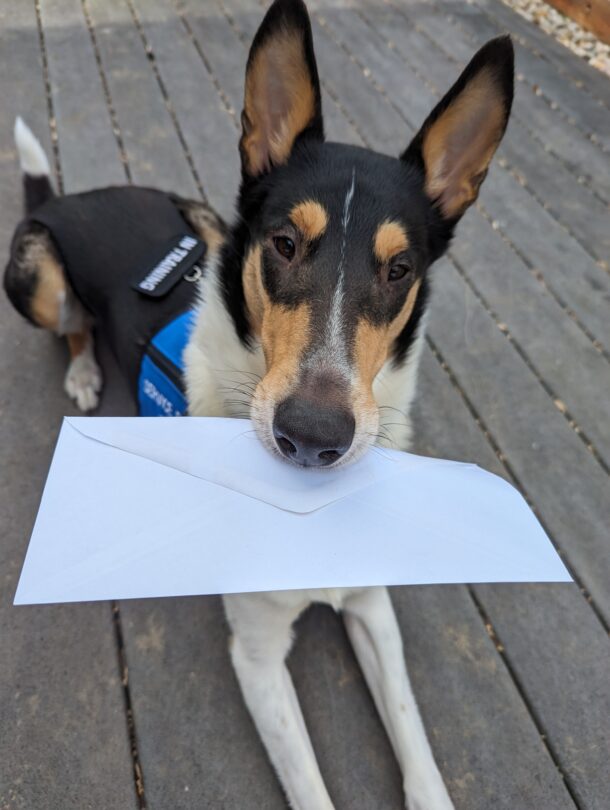
Introducing a service dog to their harness, vest, or collar is an opportunity to begin training sessions and public access work on a positive note. Service dogs can learn to associate being handled and fitted with equipment with treats, and they can learn behaviors that make it easier for their handlers to put equipment on. This is a relatively simple behavior that can make a big difference for teams!
1. Make Sure the Dog Is Comfortable with the Equipment
Allow the dog to explore the vest or harness in a low-pressure environment. Leaving harnesses, vests, or collars accessible lets the dog approach and investigate them voluntarily. Pair exploration with treats, or even engage in light play nearby.
If introducing a piece of equipment that’s new to the dog—such as a rigid harness—take time to ensure the dog is comfortable with it being moved around. Simply pick it up, put it down, or move it to a new location while tossing a few treats. Keep your movements casual and relaxed, and repeat just a few times.
If the dog shows fear or hesitation, slow down and implement a structured desensitization and counter-conditioning approach.
2. Optimize Your Positioning
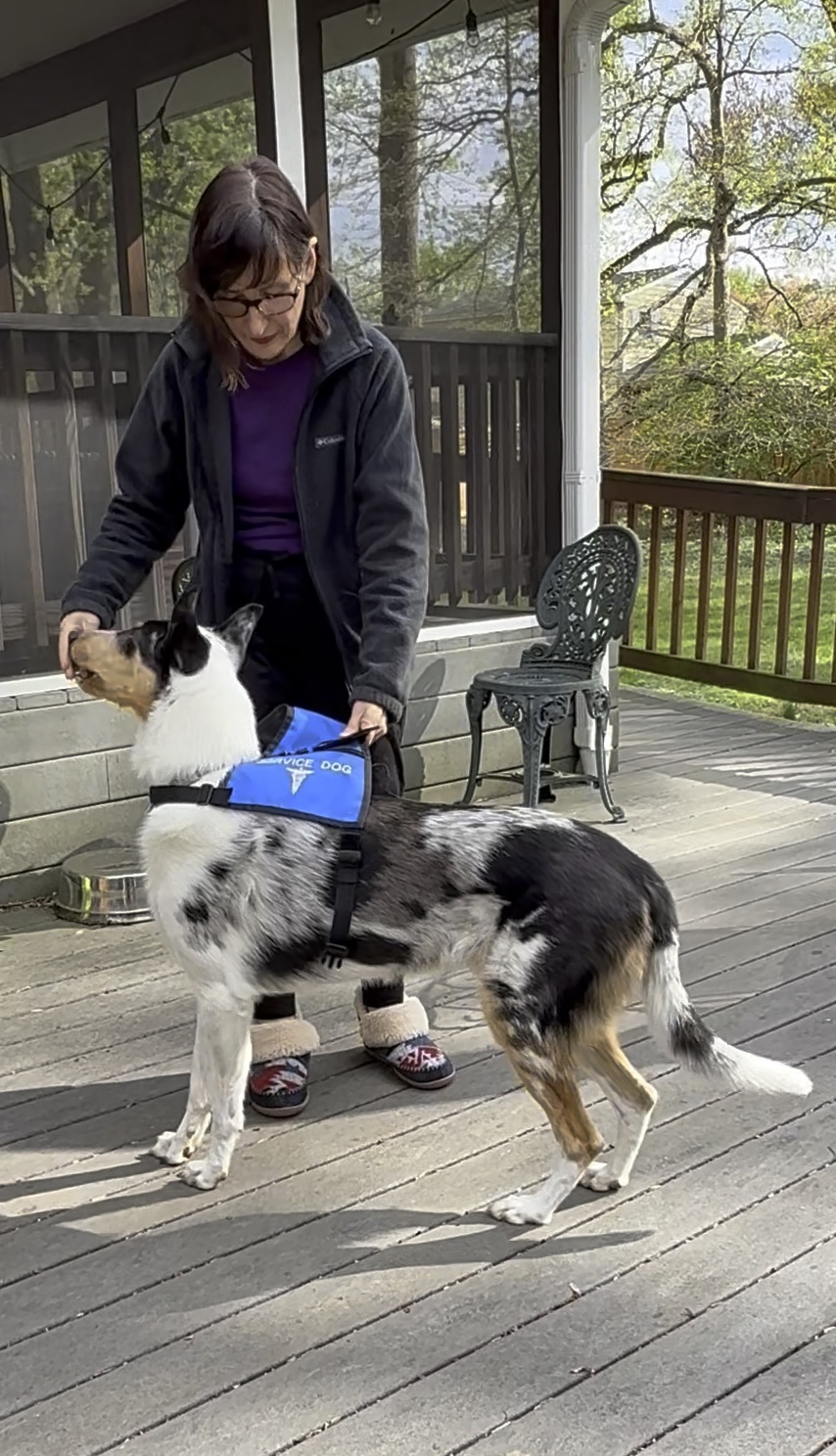
When putting equipment on, stand perpendicular to the dog rather than directly facing them. That helps you avoid bending over the dog or moving toward them to get the equipment on, both of which can be intimidating or even aversive to some dogs.
3. Allow the Dog to Move Into the Equipment
Rather than moving the equipment onto the dog, let the dog move into it. Consider how you need to adjust a jacket if someone were to put it on you, versus you putting it on yourself to begin with. Having control over the process makes it more comfortable. This approach helps the dog feel both physically and emotionally at ease.
4. Teach the Dog to Move Into the Harness or Vest
There are several ways to train the dog to move into the equipment:
- Luring: Guide the dog with a treat.
- Targeting: Cue a nose touch to hand.
- Shaping: Mark and reward behaviors that progressively approximate the goal.
- Combination: Use luring or targeting initially, then transition to shaping as the dog begins to offer the behavior.
These approaches give the dog control of the movement into the equipment, which can make the process more comfortable for the dog. During the first repetitions, simply reward the dog without fully fastening the harness to ensure the dog is truly comfortable with the first steps of this behavior.
5. Teach Calm Standing for Fastening
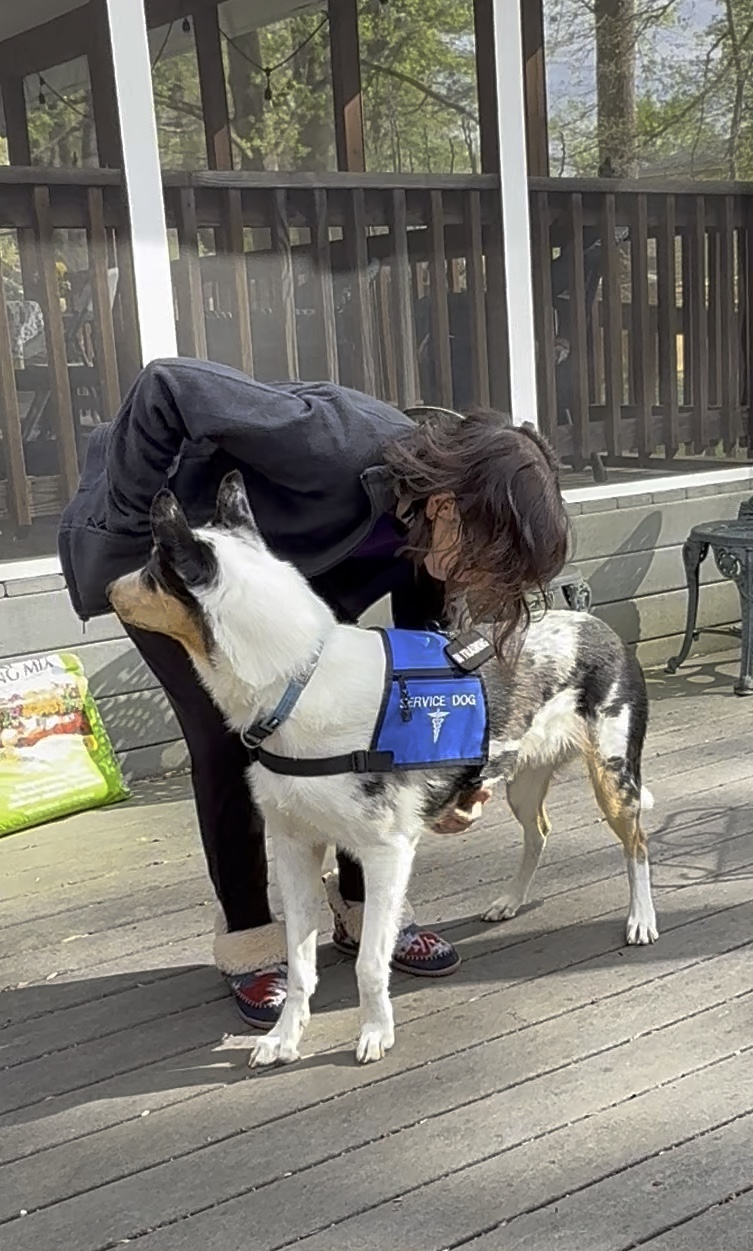
With a puppy or young dog, use treats or a lick mat while fastening and adjusting the equipment. With an adult dog already trained some behaviors, you can cue a stand stay, a chin rest on an item, a stand on a platform or simply reward after fastening the vest or harness.
6. Keep Sessions Short and Positive
Initial experiences should be brief and enjoyable. Building early positive experiences with equipment supports long-term success and creates a smooth transition into formal training and public access work. Ideally, with young puppies, the process of putting on collars, leashes, and harnesses has been paired with treats, so the dog always associates this with a positive experience.
🎥 See it in action: Watch our demo on YouTube.
Fixing “Dressing” Problems
If a dog already shows hesitation, use desensitization and counter-conditioning. Proceed more slowly, spending extra time on each step.
When introducing the behavior of moving through the harness or vest, periodically toss treats away to reduce pressure in sessions. Take as long as needed until the dog voluntarily moves their head into the opening without a lure.
Do not attempt to fasten the harness or vest until this step is genuinely easy for the dog. Using an extra-loose harness can help: loosely clip, treat, immediately unclip and remove. Then proceed gradually toward fully fitting the equipment. Always moving at the dog’s pace is the key to building a lasting, positive association.
Why “Get Dressed” Matters
This is one of those behaviors that is so simple, it’s often overlooked. Many dogs arrive at training sessions already wearing equipment, and a common complaint is that the dog runs or moves away when it’s time to put gear on. For service dogs, this step is particularly important: handlers may not be able to easily manage equipment if the dog is tense or resistant, and the work itself can already be stressful. Taking the time to teach “Get Dressed” using a thoughtful, dog-centric approach, ensures the dog is comfortable, and starts every training or public access session on a positive note.