
Certified Service Dog Coach Scott Bacheller is a graduate of Animal Behavior College and holds both Fear Free Certified Animal Trainer and Fear Free Shelter Certified credentials. Through his business, Gentle Giant Dog Training, Scott provides private lessons ranging from puppy training to behavior consultations in the Boston, Massachusetts, area. He also offers service dog coaching and supports veterans through a nonprofit organization.
What made you decide you wanted to train service dogs?
I got into dog training after adopting my last dog, Buster, while recovering from a life-changing brain injury. Although Buster wasn’t a service dog, he showed me firsthand how dogs can play a vital role in a person’s healing journey. Buster came into my life at my lowest point — he saved my life. I began working with service dogs as a way to honor the life debt I owe him, and to help others who may be in the place I once was.
Tell us about your work training service dogs.
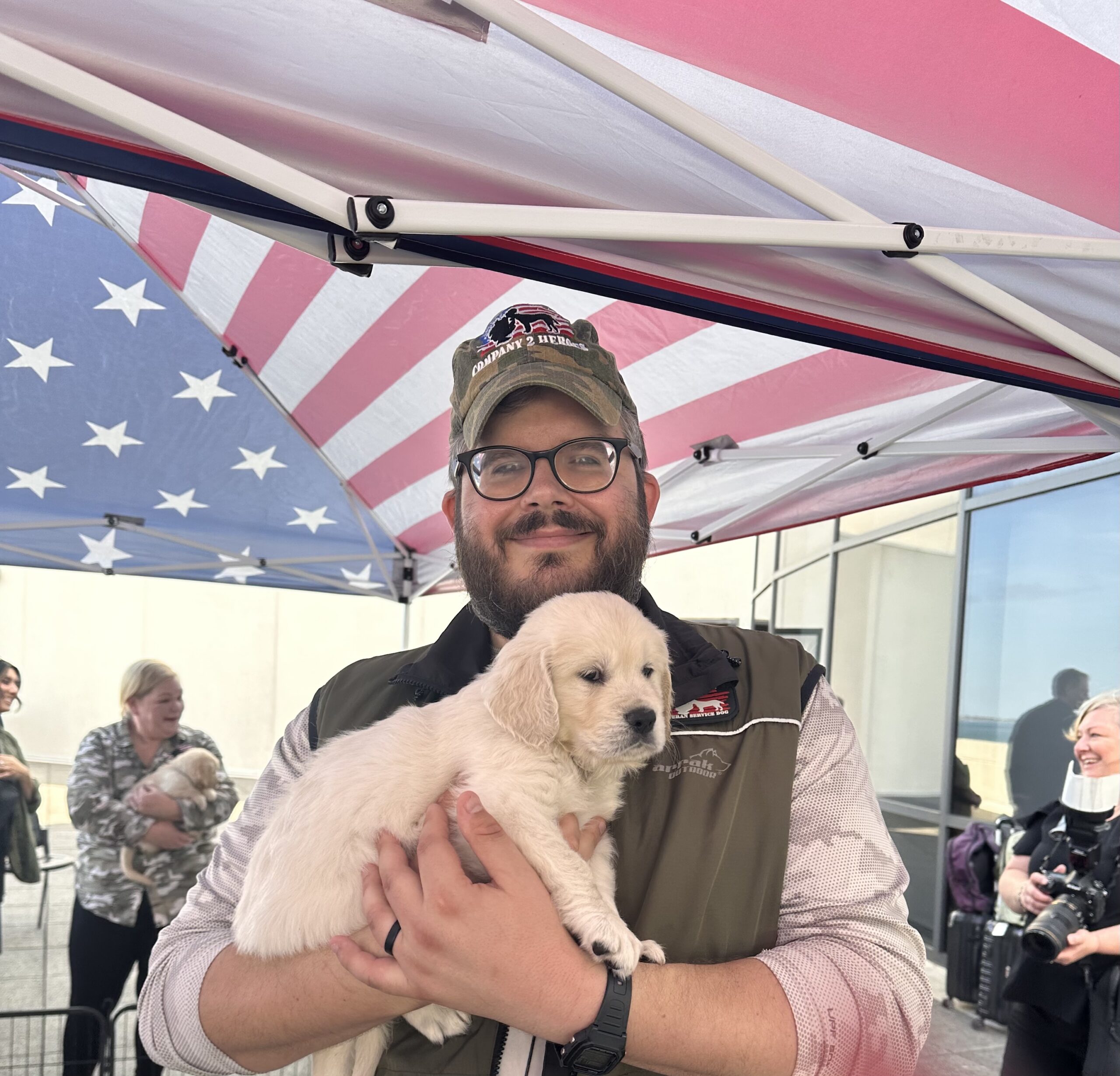
I am the lead trainer for Company 2 Heroes, an all-volunteer organization that helps disabled veterans learn how to train their own service dogs. Our mission is to shorten the two- to four-year wait many veterans face when applying for a traditionally trained service dog. I lead group classes, individual training sessions and public access outings.
Can you tell us a bit about your dog training business.
My business is Gentle Giant Dog Training — GentleGiantDogTrainingMA.com. I specialize in helping newly adopted rescue dogs adjust to life in and around Boston. I also support service and therapy dog teams throughout their training journeys.
How has earning your Service Dog Coach certificate impacted your work?
Earning my Service Dog Coaching certificate has allowed me to expand my business and offer more to my clients. The program also provided me with an entirely new set of tools that benefit my non-service-dog clients as well — after all, who doesn’t want a rock-solid default check-in on walks?
What motivated you to enroll in the Service Dog Coach certificate program?
I enrolled in the Service Dog Coach course to better support the veterans in our program. Many of our advanced teams were coming to me with task-training questions, and I wanted to ensure I had the most effective tools and techniques to guide them.
What did you most like about the SDC course?
What I appreciated most about the course was its focus on the dog’s emotional well-being. It wasn’t just about getting a dog to perform tasks in public — it emphasized helping the dog feel confident, secure and happy while working.
What has surprised you about working with service dogs?
One of the most surprising things I’ve discovered about service dog work is how transferable the skills are. The Service Dog Coach course truly elevated my overall training skill set and deepened my understanding of communication between dogs and their handlers.
What advice would you give to trainers thinking about getting involved in service dog training?
For anyone considering getting into service dog work, I would recommend honing your communication and interpersonal skills. Service dog clients often invite you into some of the most personal and vulnerable corners of their lives, and that trust deserves care and respect.
Is there anything else you would like to share?
I hope my story encourages more trainers to explore service dog work — it is an incredibly rewarding path. One evening after class, a veteran stopped me to thank me for the time and effort I’d put into the program. He told me how training his Bedlington Terrier to be a service dog had completely transformed his life in ways he never imagined. I tend to be my own toughest critic, but I always think back to that moment on hard days — it reminds me why this work matters so much.